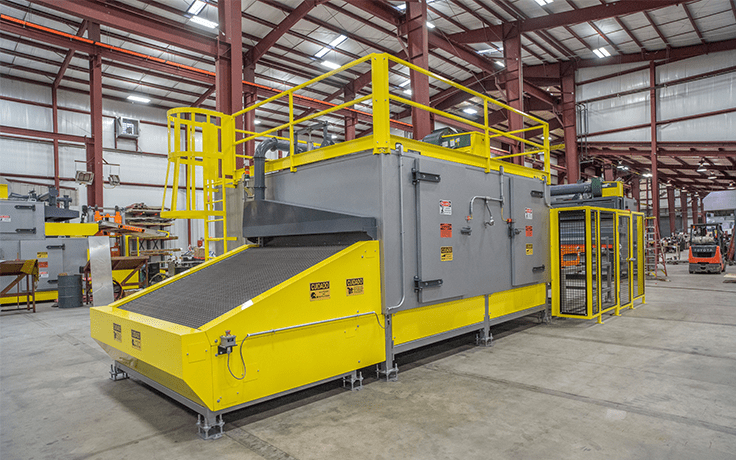
DTI-1540 Drying Oven
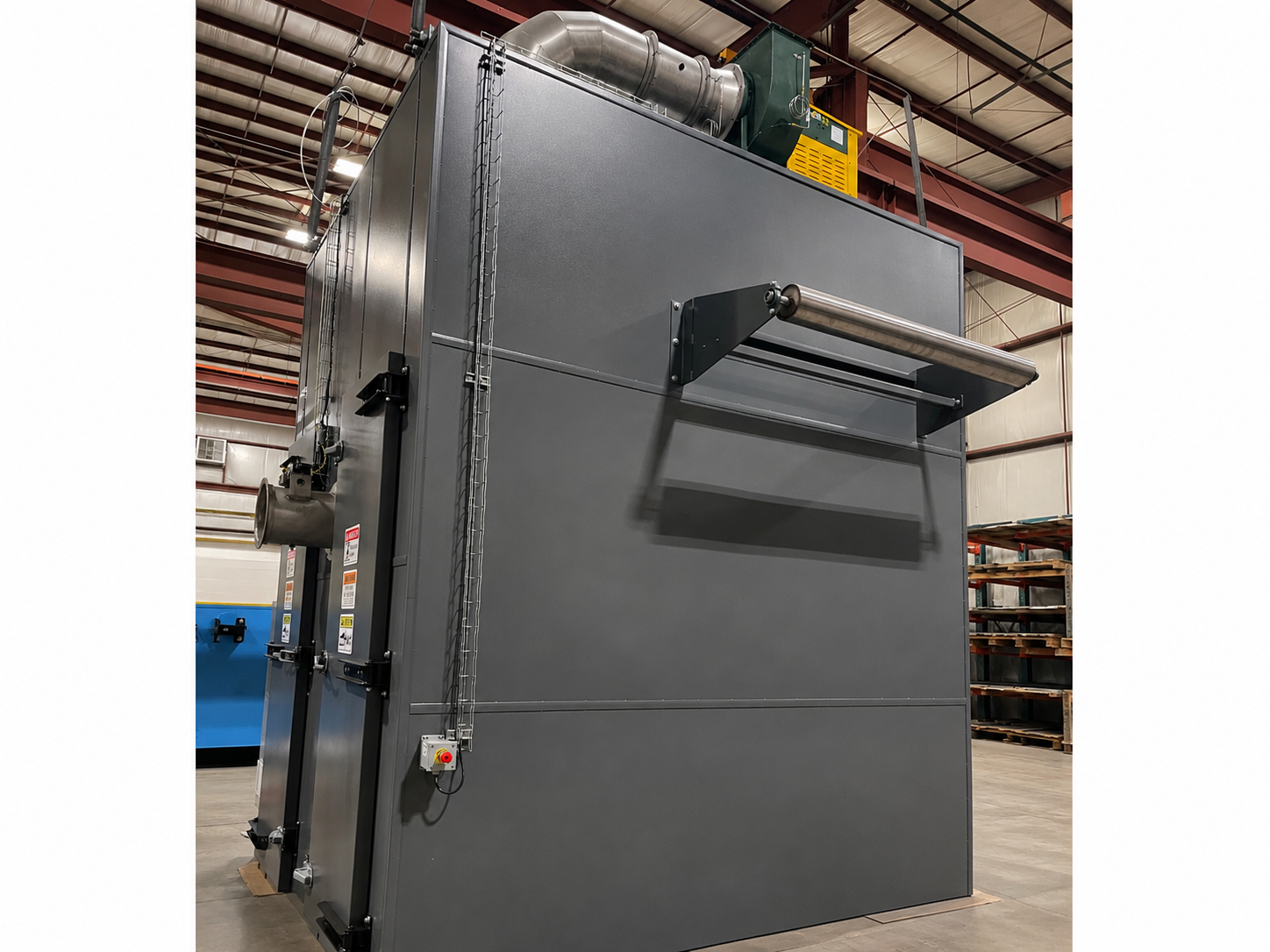
Customer directive
The customer required a continuous drying system for a woven fabric product that would integrate with existing upstream and downstream equipment. Based on the required production rate and drying time, approximately 31 yards of fabric needed to remain inside the heated chamber. Davron developed a vertical serpentine conveyor arrangement that provided the required residence time while minimizing the overall system footprint.
Description
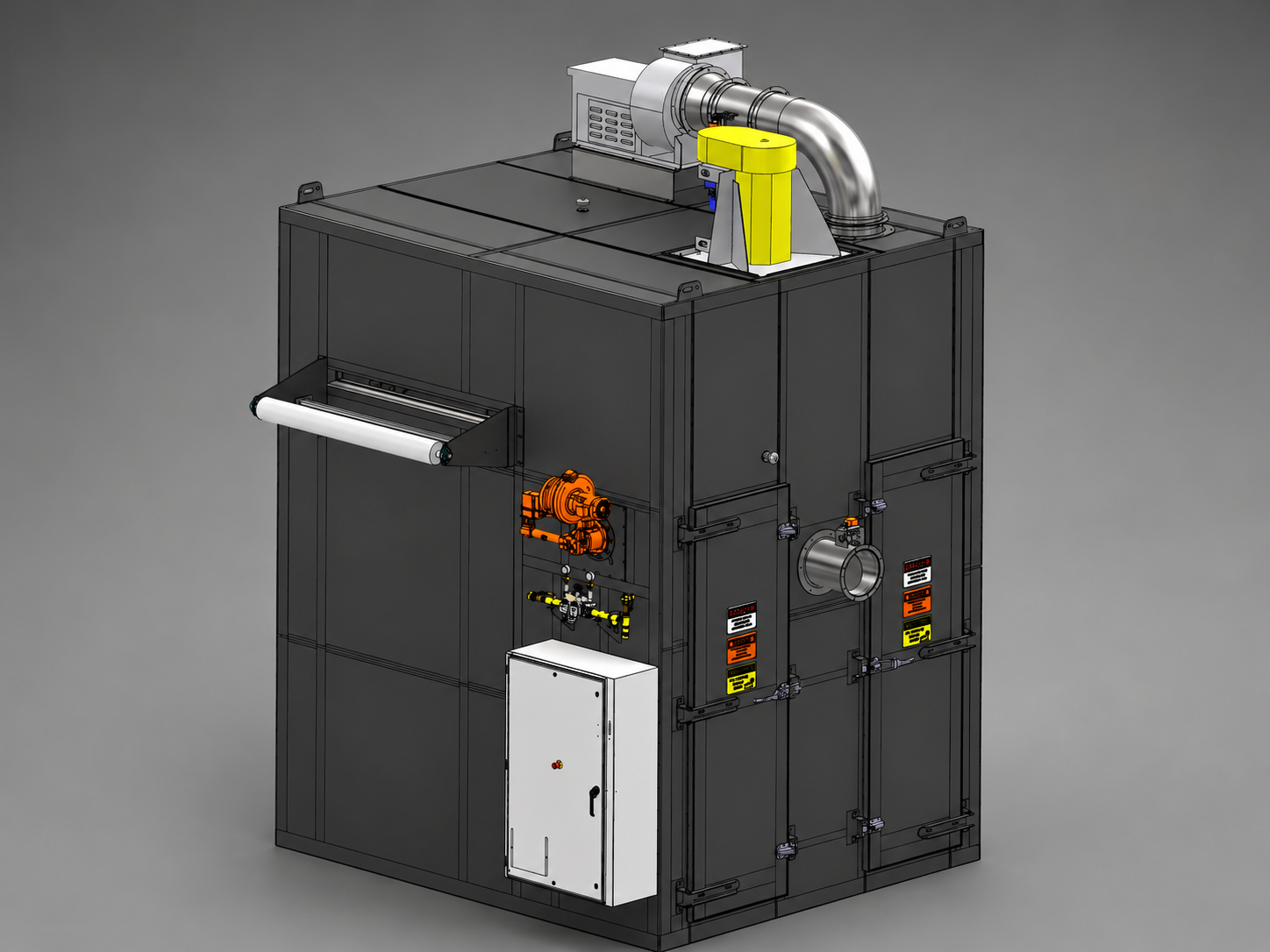
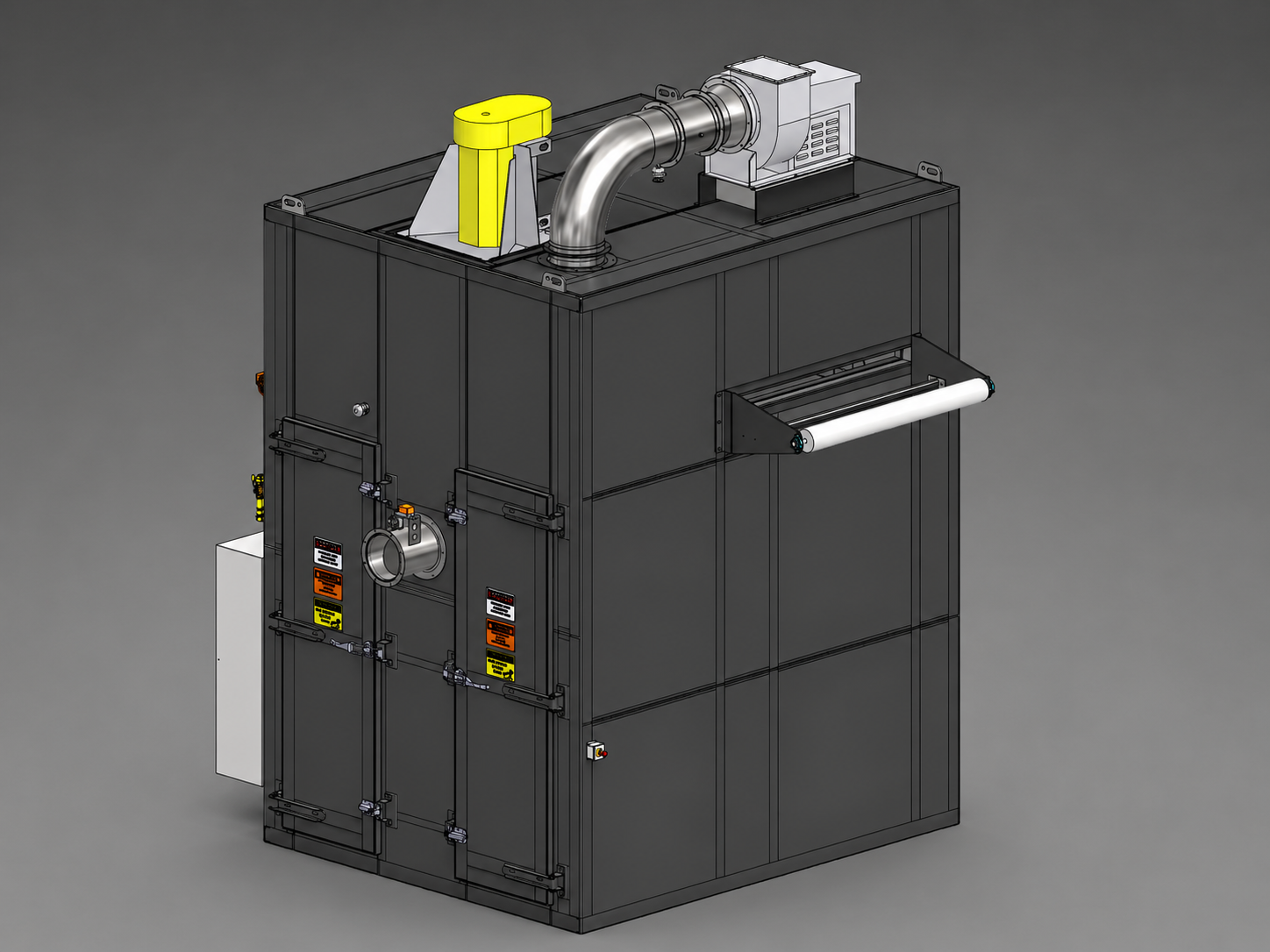
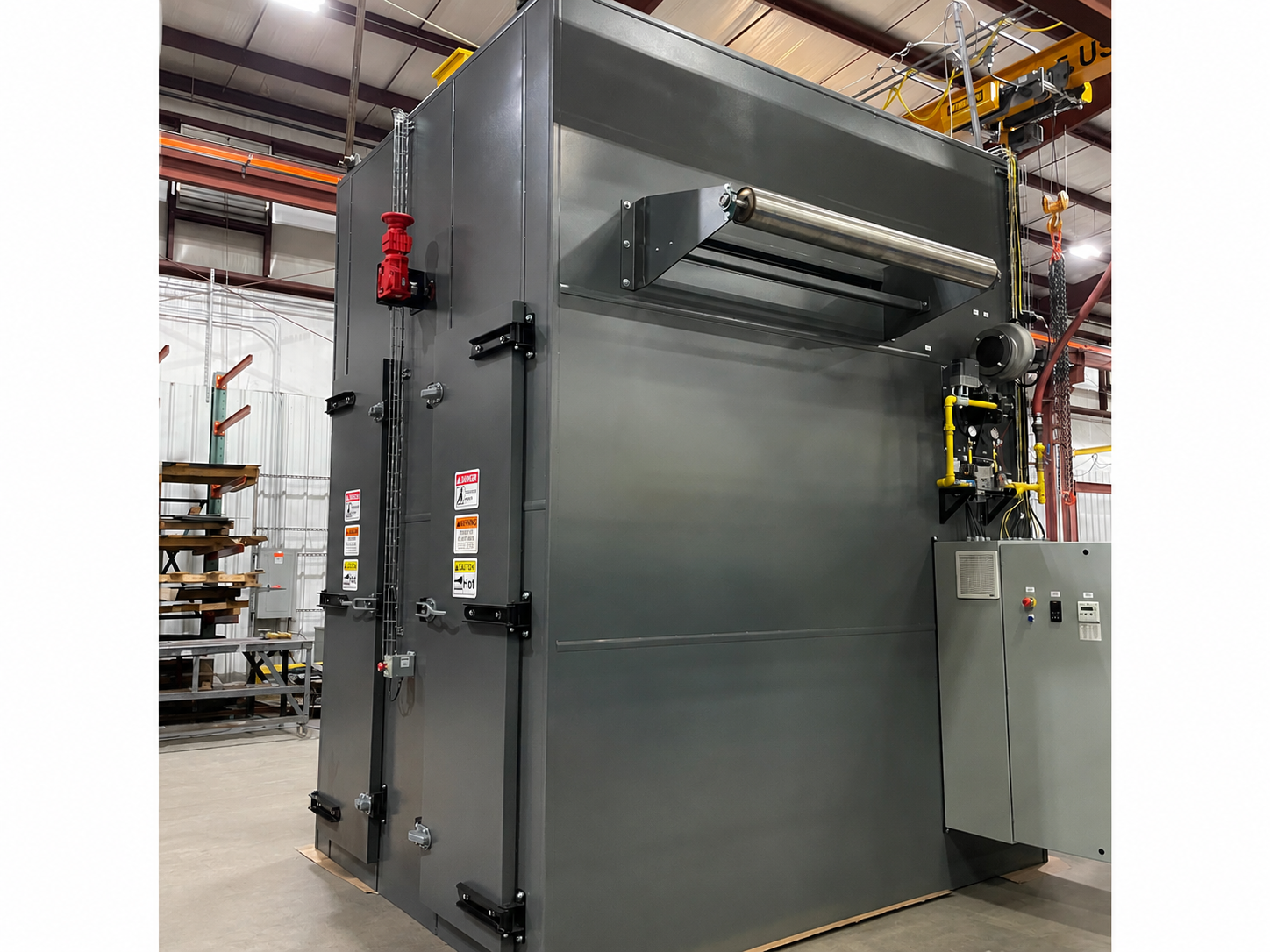
The conveyor utilizes an external entry and exit roller with eleven internal rollers arranged in a vertical serpentine path. Six upper driven rollers work together with the customer’s production line to maintain the required line speed and consistent fabric tension throughout the drying process.
Heated recirculated air is directed downward through the fabric, using gravity to assist in moisture removal while providing uniform drying. Moisture-laden air is exhausted from the return air path before the remaining air is reheated and recirculated, resulting in an efficient continuous drying process.
Specifications
| Product Being Processed | Woven Fabric |
| Overall System Dimensions | 14’-2” L x 13’-2” W x 17’-3” H |
| Interior Chamber Dimensions | 8’-4” L x 7’-4” W x 10’-7” H |
| Type of Heating System | Natural Gas Burner |
| Design Operating Temperature | 150°F – 400°F (66°C – 204°C) |
| Maximum Operating Temperature | 400°F (204°C) |
| Product Support | Eleven-roller vertical serpentine conveyor with driven upper rollers and idler lower rollers |
| Controls | PLC-based control system with operator HMI and UL-listed control enclosure. |
Alternative capabilities
Davron Technologies, Inc. designs and manufactures ovens of this type to meet many unique process requirements, including but not limited to, the following:
- Airflow: Vertical downflow or upflow, horizontal crossflow, or custom airflow patterns.
- Industries Served: Automotive, aerospace, industrial foam, textiles, filtration, and continuous web processing.
- Materials Processed: Woven and non-woven textiles, insulation, industrial fabrics, foam products, and filtration media.
- Other Processes: Drying, curing, preheating, solvent evaporation, and heat setting.
- Heating Systems: Modulating natural gas-fired (direct or indirect), electric, thermal oil, steam, and hybrid systems.